.png)
Participating schools from previous Student Forums present their approach to teaching animation alongside a selection of student works. Each presentation follows a simple structure – approach, films, and a final “signature moment” – giving each school the scope to express its identity and creative focus.
with Robert Sowa & Ewa Grzesiak
V4 Focus School Presentation and Screening: The Animation Film Studio at the Jan Matejko Academy of Fine Arts in Kraków
How do schools approach the teaching of animation? What does their curriculum look like? What is a graduate’s profile? Representatives from the participating schools address these and other questions in their presentations.
V4 Focus School Presentation and Screening: The Animation Film Studio at the Academy of Fine Arts in Kraków
Presentation of students’ work.
The Best Animated Films for Children 2025 brings you a hand-picked selection of the finest contemporary short films for kids – films you won’t find anywhere else. Curated by the team behind Fest Anča International Animation Festival, this programme is designed to give children and their parents unforgettable storytelling and visual experiences from the world of animation. This international collection is packed with fun, educational value, and creative diversity. It showcases distinctive authorial voices, imaginative art styles, and original animation techniques – everything that makes auteur animation such a rich and inspiring experience for young audiences.
No dialogue.
Interpretation into Slovak Sign Language.
Includes Slovak descriptive subtitles.
Free admission for children under 12.
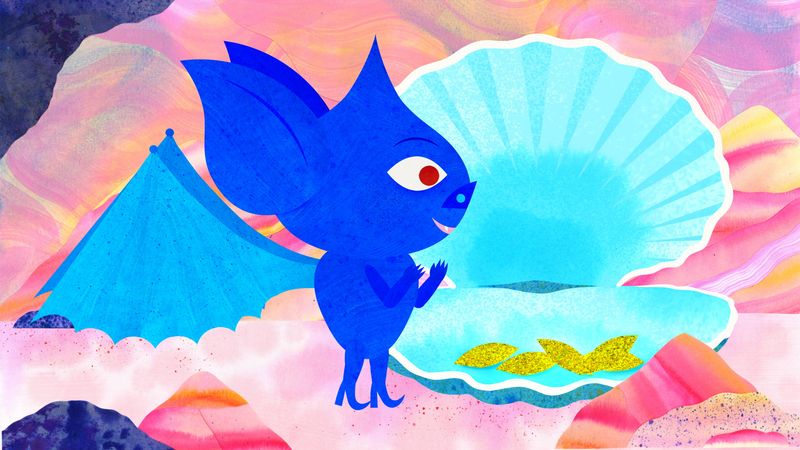
Every night, Paulette wishes on a shooting star to find her missing pet rat. As days pass without its return, she wonders what's wrong with her star.
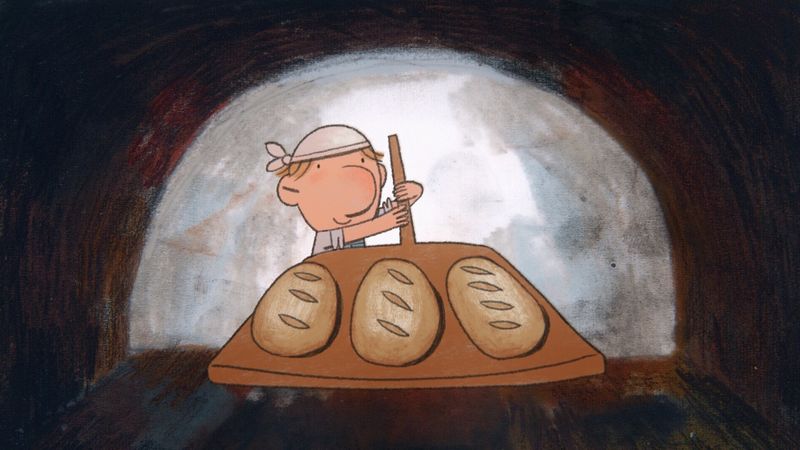
Every morning, Boris the baker makes fresh bread and pastries for his neighbors until he becomes allergic to flour. How can he continue baking for the village?
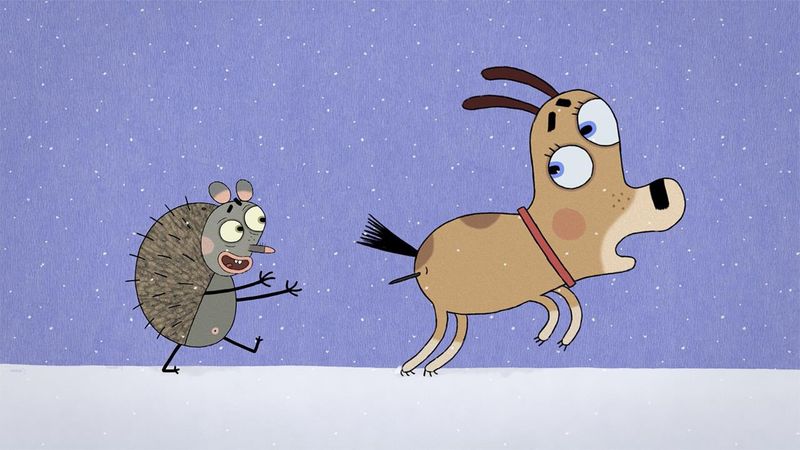
The hedgehog is just about to go into hibernation when he notices that one of his spines is missing. It's stuck in Lena's dog's bottom, of all places. Getting it back won't be easy...
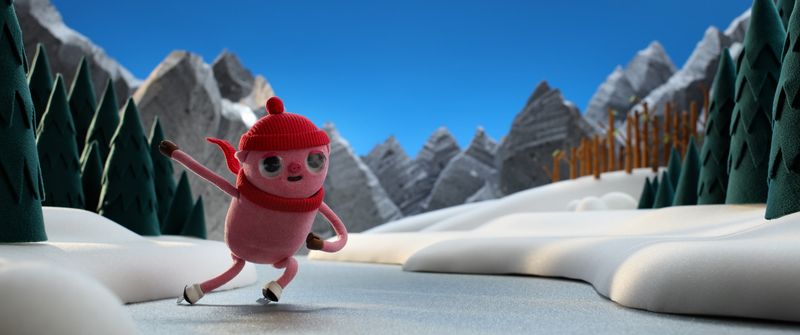
Two friends ice-skating in a winter wonderland stumble upon a strange world beneath the ice. They must face it without fear or preconceptions.
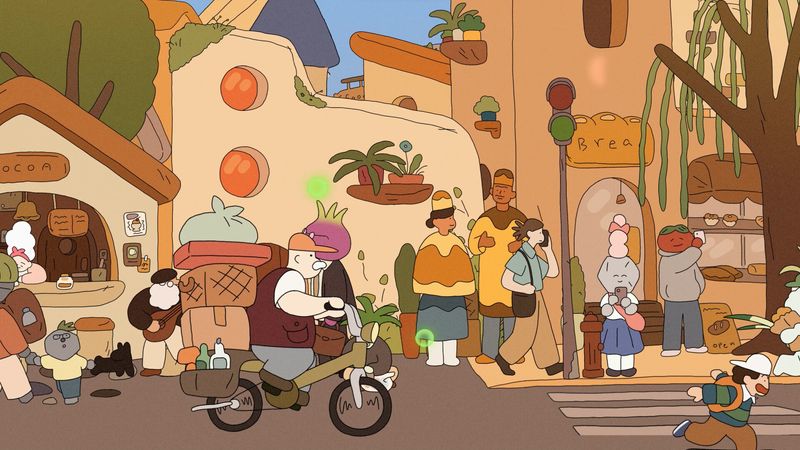
In the early morning, an architect picks ripe tomatoes from their garden to pack a lunch. Eco-energy from small acts of stewardship powers them as they face the climate crisis again..
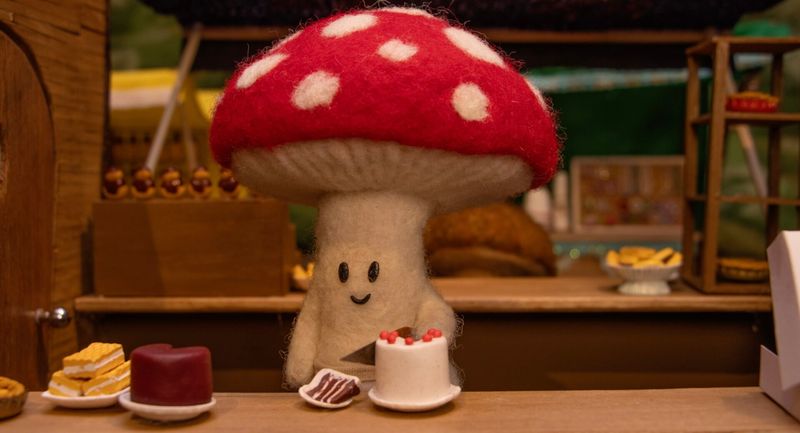
Bobel, a poisonous little mushroom, dreams of becoming a cook at his village market. But the prejudices of the villagers will make his task difficult.
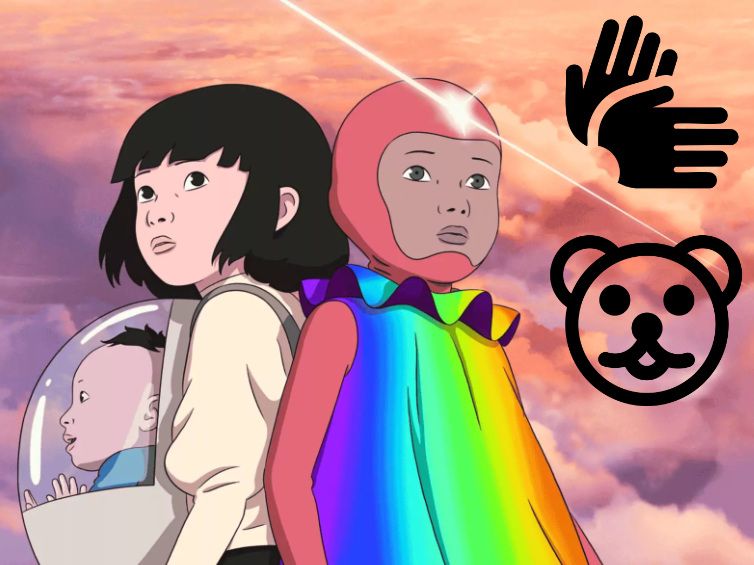
In the year 2075, ten-year-old Iris witnesses a mysterious boy falling from the sky, wrapped in a rainbow cloak. His name is Arco, and he comes from a distant future where time travel exists but is strictly forbidden to children. As Iris hides him in her home, a tender friendship begins to grow between them. Together with a small robot, they embark on a quest to recover a lost diamond that may allow Arco to return to his time – and perhaps even save their world. Arco is a visually stunning and heartfelt odyssey filled with wonder, hope, and the magic of connection.
English subtitles.
Includes Slovak descriptive subtitles.
Interpretation into Slovak Sign Language.
Free admission for children under 12.
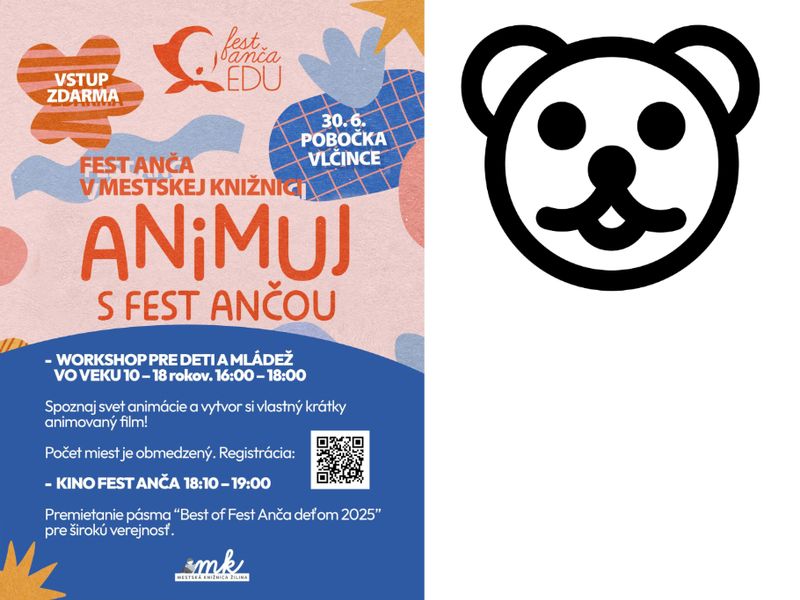
Workshop for children and teenagers between 10–18 years. Discover the world of animation and create your own short animated film. Free admission, limited capacity. Workshop in Slovak language
Reservations must be made in advance using this form.
For more information, click here: https://mkzilina.sk/animuj-s-fest-ancou/
V4 Case Study
with Robert Sowa, Head of Animation Film Studio, Academy of Fine Arts in Kraków & Aneta Zagórska, producer, founder of Krakow Film Klaster
This presentation introduces the Krakow Animation Centre, a production studio that bridges education and industry. As part of the Krakow Film Cluster, it connects professionals with emerging talents, supports student collaboration, and develops original projects from shorts to features. A practical example of how schools can strengthen ties with industry and expand international opportunities.
Dear Diary, today I dreamed about a planet ruled by crabs. Everyone was treating me very nicely up there, and then they turned out to be weird. Made me think about breaking up with my husband. Also went to the doctor because I thought I might have a tumour. Turned out I’m just stressed. Does any of this resonate with you?
English and Slovak subtitles.
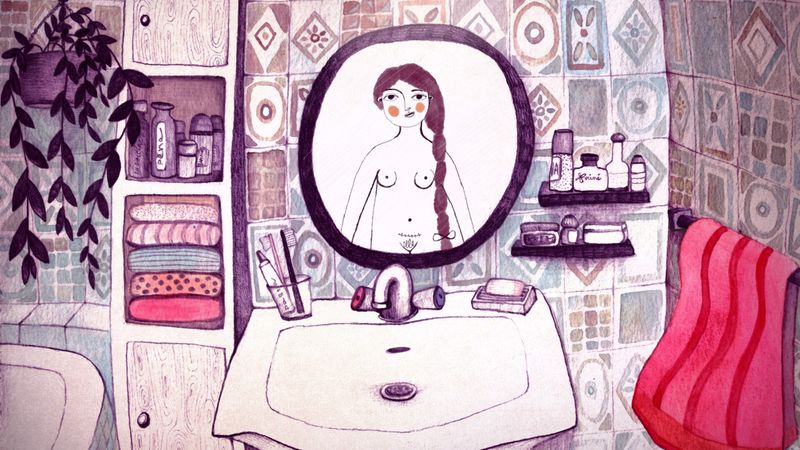
A creative artist finds herself trapped in the routine of everyday domestic life after the birth of her children. Frustration from the lack of time, support from her husband, and sleep slowly robs her of perspective and mental balance. Can she find her way back to herself, reconcile her life roles, and rediscover her lost inner peace?
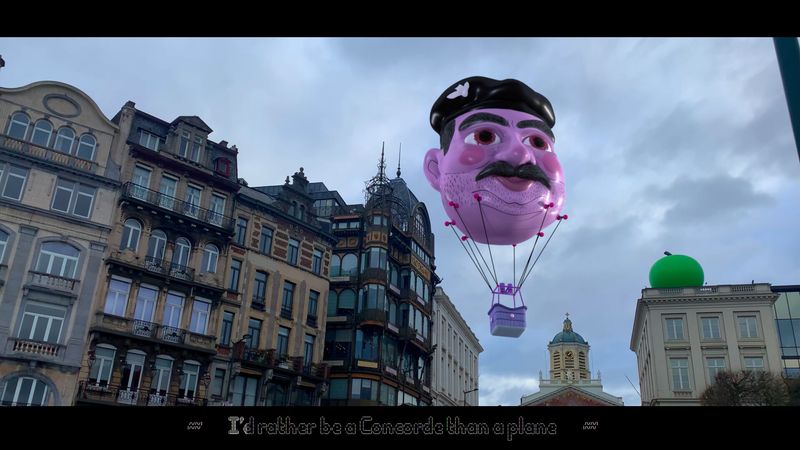
The story of an immigrant and his companion guide Wizard saying Hello to new unknown lands. In this experimental film that recreates old fantasy video games through irony, the characters face strange situations and places that allude to the absurd nature of the immigrant's journey.
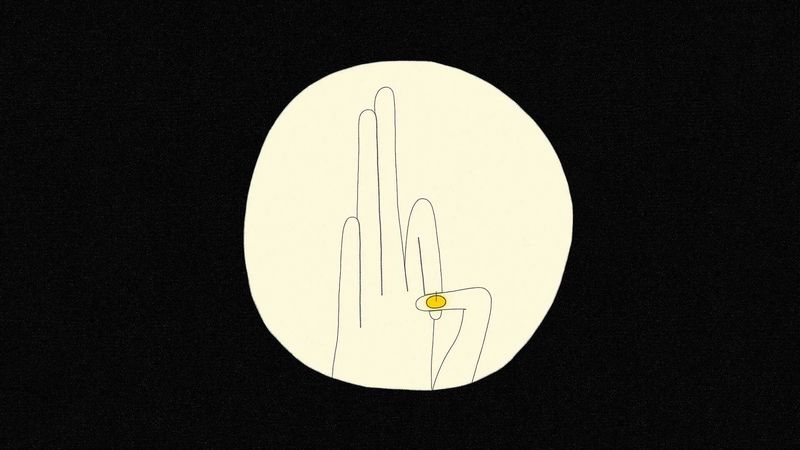
Growing thorns requires several steps. Planting in soil, waiting for rain, and then harvesting. A Hat-Man scatters the fruits of his gathering under the soles of passersby. Ouch! Ow! Owie! One day, a storm breaks out and wreaks havoc on his meticulously planned orchestration.
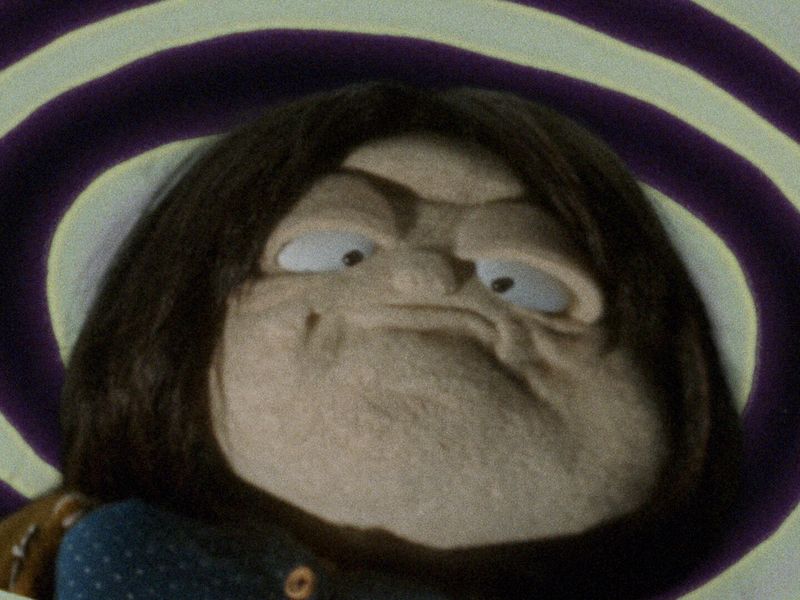
Noticing her husband Ivar's new scent, Anne lies awake at night with a nagging question: should she leave him?
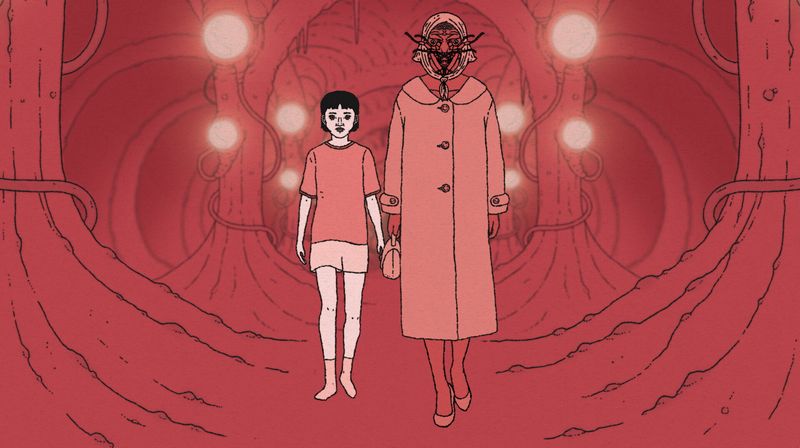
A young woman, tired of working at a seaside diner, reaches out to cosmic forces.
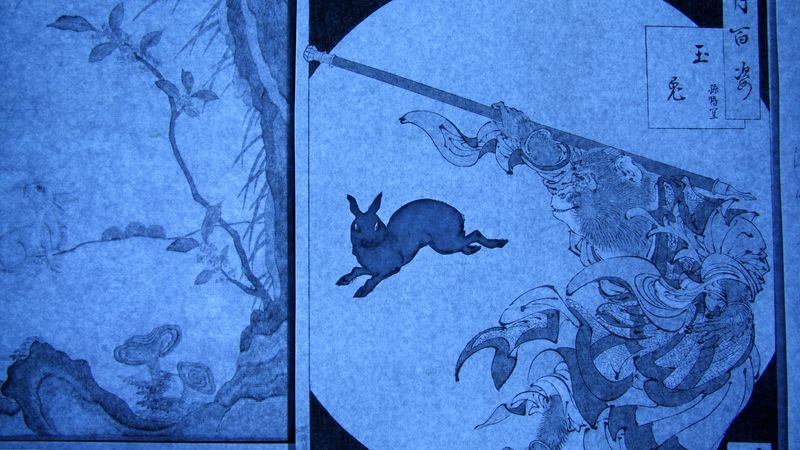
Jade Rabbit, symbol of immortality, discovered a past version of herself. A time-warping chase ensues.
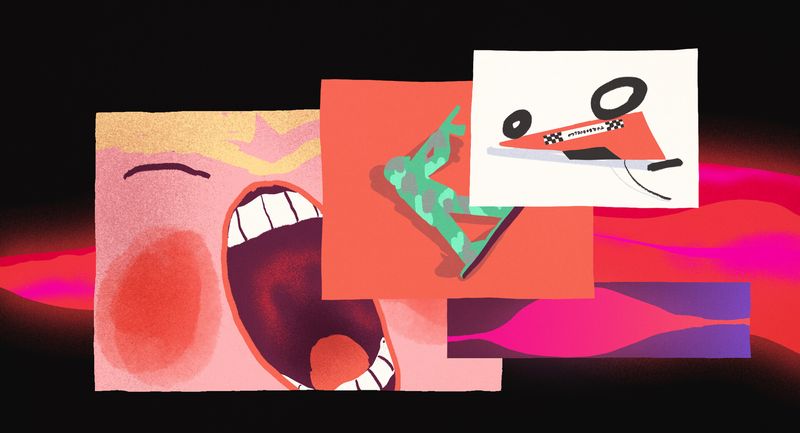
“Earthquake” is a child whose uncontrollable anger earned him his nickname. Like a real earthquake, his emotions erupt suddenly, leaving damage behind. The film explores his inner world, tracing these impulses to their origins and capturing a stage of growth where he struggles to understand and express his feelings.
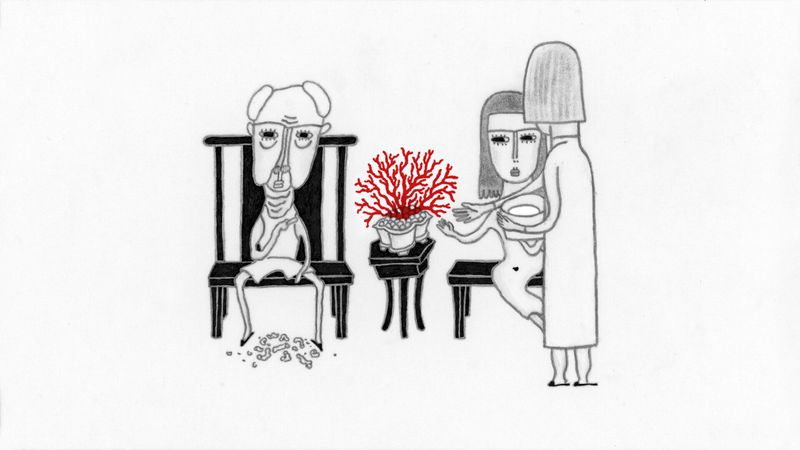
I killed my mother. She called me a betrayer. Will I be able to escape the disease passed down the women in our family?
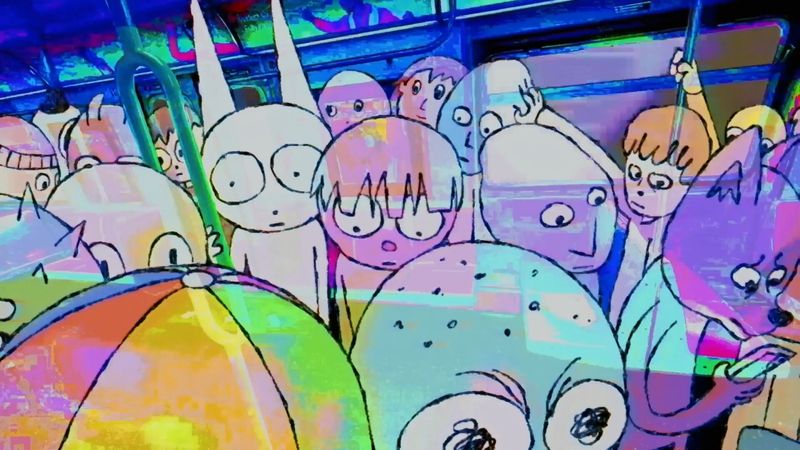
Blargh is a passive little feller, bottling up his thoughts and feelings—until he discovers a ball of black goo in his stomach. He stays silent through violence and misses his stop on a crowded subway. At an empty station, he meets the beaten person. After a quiet moment together, something shifts. Back in the crowd, Blargh finally speaks—by puking the goo on everyone.
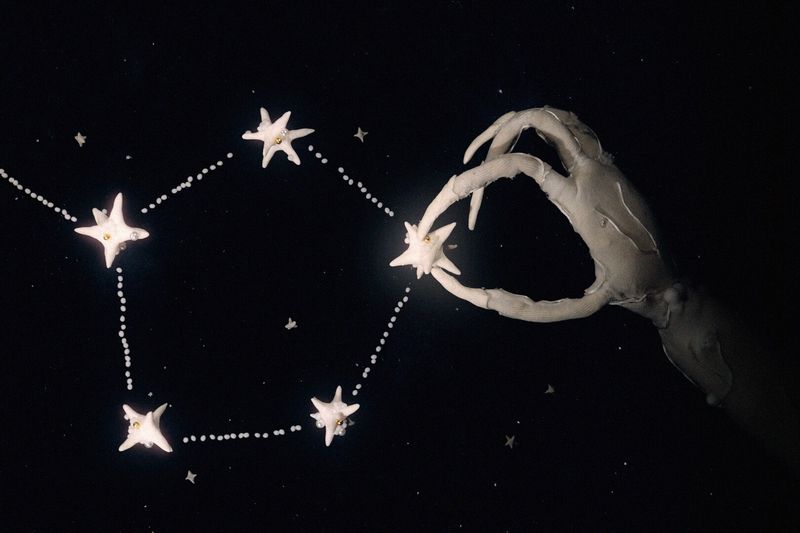
In the void of night, a hungry creature looks for food and perpetuates an everyday cycle.
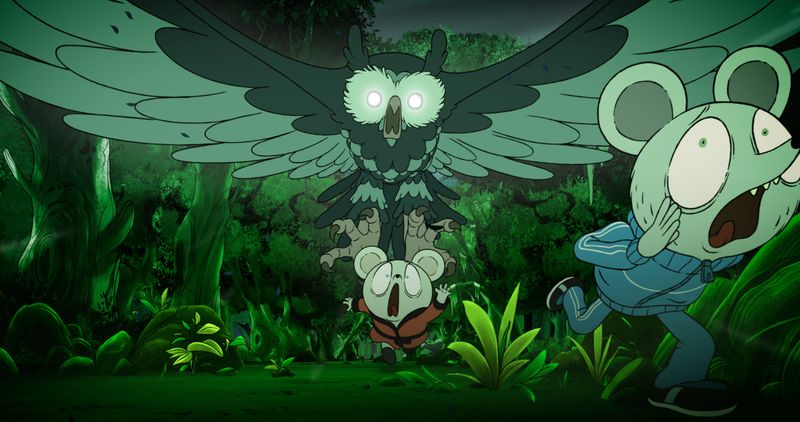
Arnold, a middle-aged mouse in the grip of an existential crisis, is convinced that the world around him is nothing but an elaborate illusion – a staged set rather than reality. While his wife María carries on as if everything is normal, Arnold begins to question society, confronting friends, neighbours, and even the all-powerful corporation that seems to control it all. Blending satire, surrealism, and dark humour, Decorado unfolds as a hypnotic and unsettling fable about social control, the artificiality of life, and the fragile nature of certainty.
English and Slovak subtitles.
Best of Fest Anča 2025 presents a curated collection of award-winning short animated films from last year’s Fest Anča International Animation Festival. An international jury awarded prizes in five categories – and now you can watch the very best: short animations, student films, music videos, films for children, and Slovak films.
Accessibility: 16+
Interpretation into Slovak Sign Language.
Includes Slovak descriptive subtitles.
Bobel, a poisonous little mushroom, dreams of becoming a cook at his village market. But the prejudices of the villagers will make his task difficult.
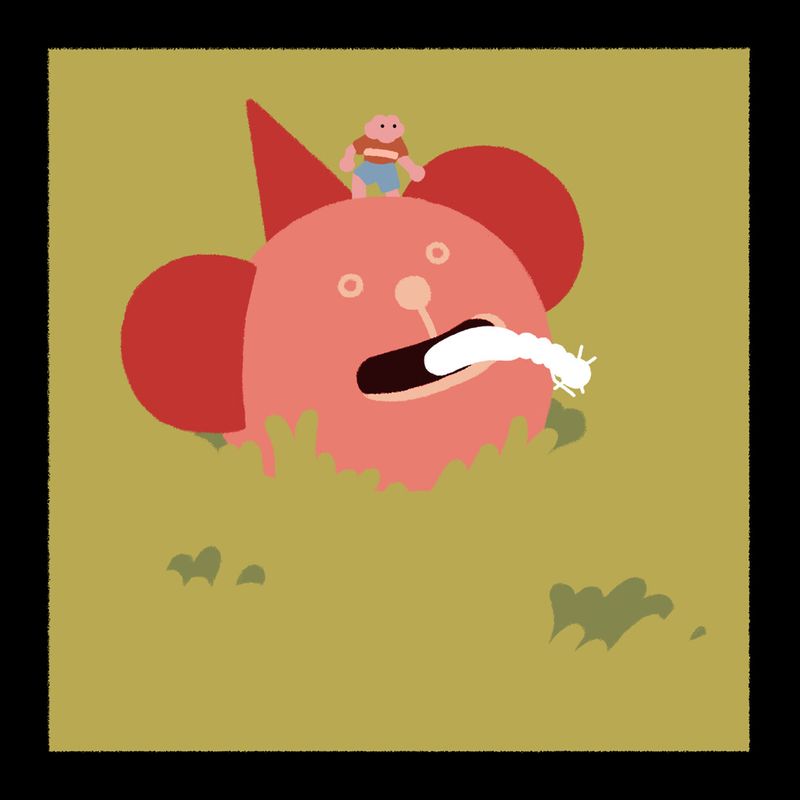
When a strange plague begins to spread across his world, a young boy must confront a terrifying creature to reunite with his long-lost friend.
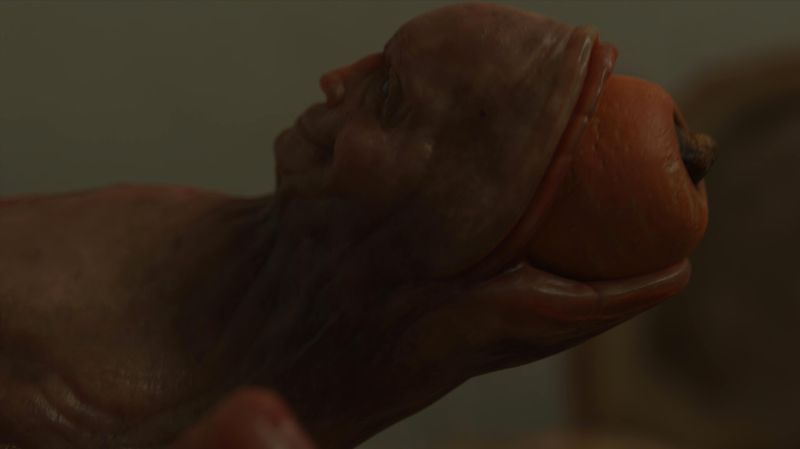
The film follows a humanoid insect whose presence and actions continuously alter and transform the surrounding world of a Bratislava housing estate. But what can emerge from its "devouring" and transforming of its environment? What changes will it bring?
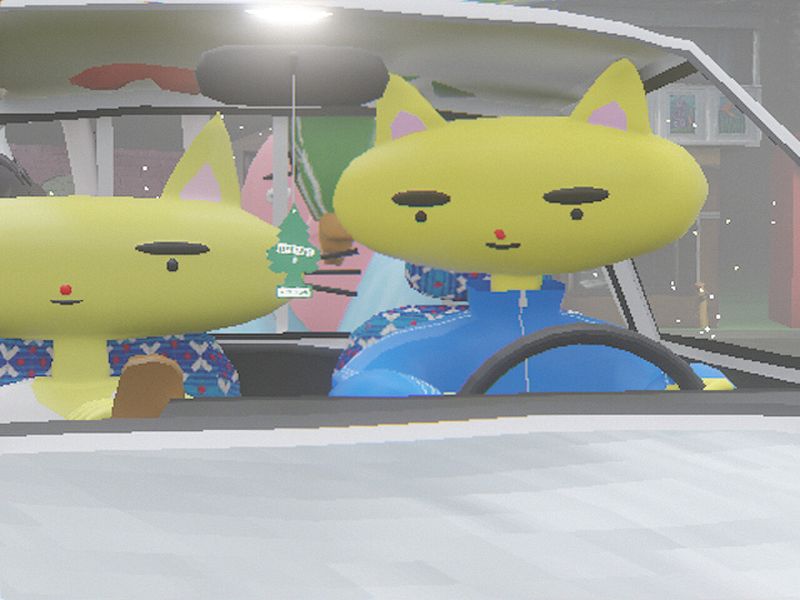
Music video for "Autopollo" by HPTA MENDEZ.
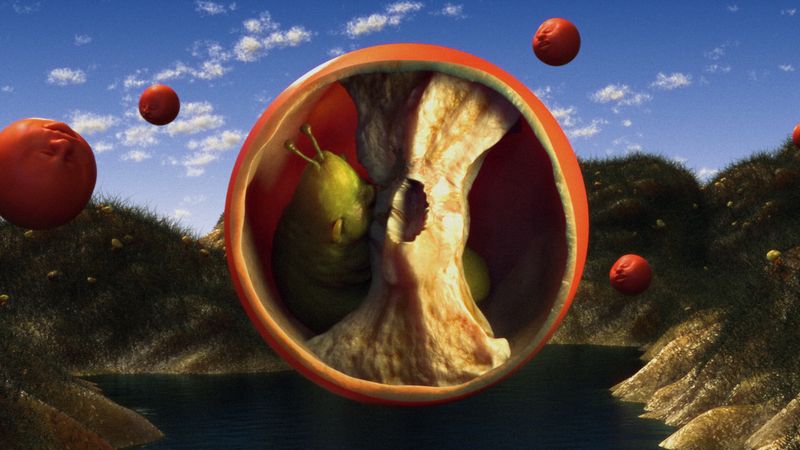
The story explores the odd relationship between a princess, a castle, and the Bug King. Through a fragmented narrative, the princess's longing for her lost kingdom transforms into the Bug King, a weak figure who becomes her surrogate in creating a fantasy within a forest of strange creatures..
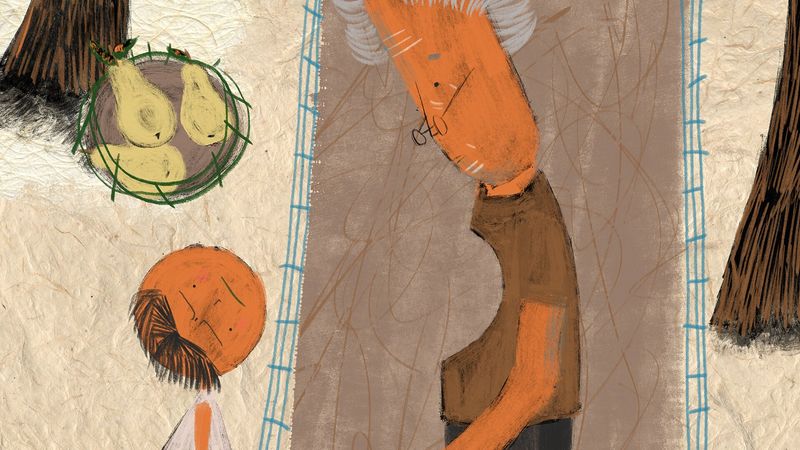
Six years old Lily visits her grandmother after grandma had a mastectomy and doesn’t have breasts anymore. At night, Lily finds out that the shadow of grandma has the breasts, Lily follows her and tries to get the breasts back for her grandma.
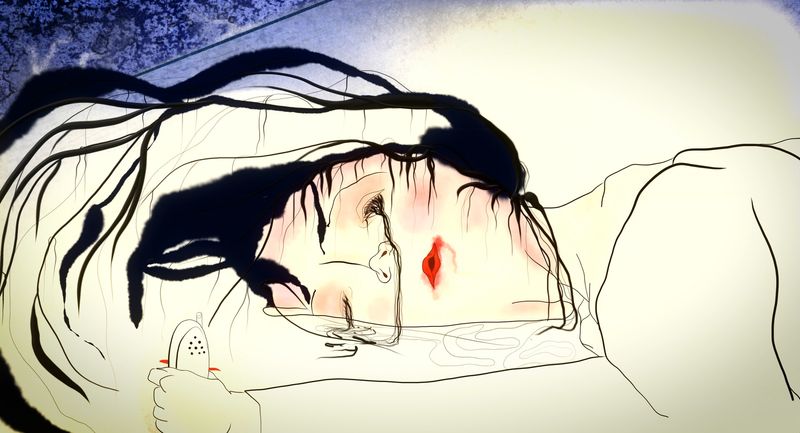
Mary can't catch a break. Fusing motherhood with being a full-time carer for her disabled son has her up to her ears in red tape, barely keeping afloat. A surreal situation is looming.
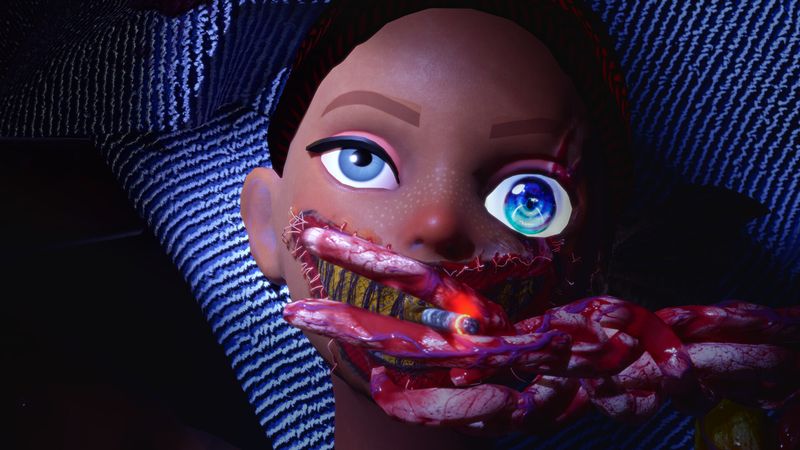
For the past three months, Candice has been exploding every day. Sometimes even 2 or 3 times a day. Her record is seven times. She currently has 192 explosions.
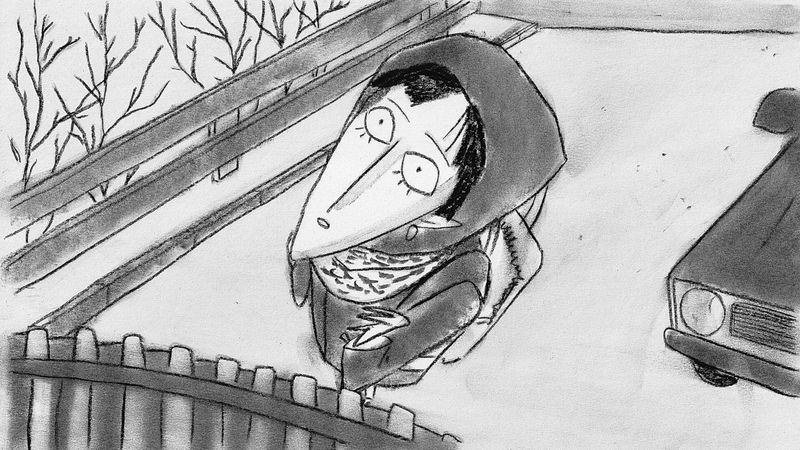
On the morning of February 24th, the director and her partner decided to travel from Kyiv to Irpin to visit his parents. A personal account of days she struggles to remember — her mind blocking and erasing memories of a rapidly deteriorating situation.
with Maï Calon & Anton Cla
How do schools approach the teaching of animation? What does their curriculum look like? What is a graduate’s profile? Representatives from the participating schools address these and other questions in their presentations.
A maximum of 7 people can be in the space at one time, where they will be able to watch selected VR films during a one-hour session.
What could be more fake than virtual reality? It’s hard to find a better competitor. Especially when VR joins forces with AI – it becomes a full-blown double whammy of artificiality. Over its first decade, virtual reality has accumulated plenty of labels, along with a fair share of fake news. Claims like “VR will replace cinema,” “soon we’ll only have sex in virtual reality,” and “before long, we’ll only meet people in VR.” So far, all of these predictions have proven hollow. People still enjoy having solid ground beneath their feet, the feel of touch on their skin, and their senses fully awakened.
This year’s inaugural VR selection is therefore not an escapist journey into distant dreamscapes as a preview of some determined future. Instead, it highlights how the reality we experience can shift – and how “realness” and “authenticity” can take many different forms. Whether we are talking about myths, work routines, social media, dreams, artificial intelligence, or even plastic interspecies surgery.
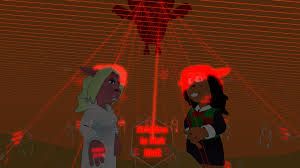
On the fictional social network Owlet, only positive comments are allowed. On the surface it's a cheerful world of cute and bizarre posts, but the idyll is shattered when popular influencer Kristine suddenly disappears and the platform begins to suppress any questions about her fate. Together with other users, you try to circumvent increasingly strict censorship algorithms and find ways to communicate despite system surveillance. The project draws on real strategies used by activists who creatively overcome online censorship through symbols, codes, and multilingual memes.
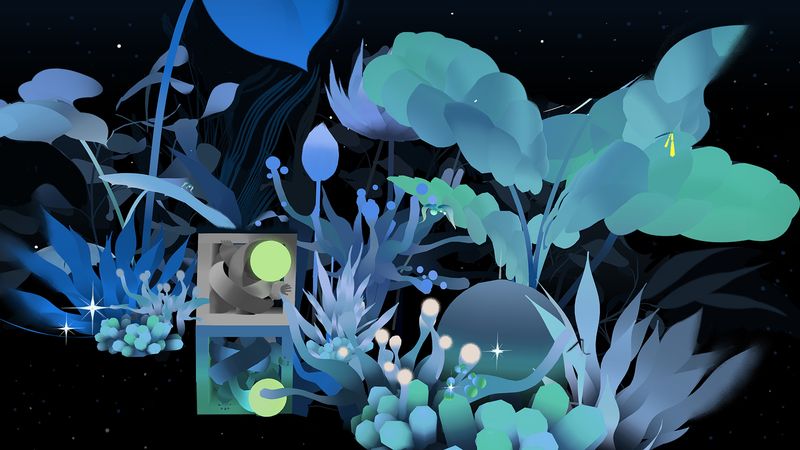
This world does not shine with diversity. Everything is made of grey cubes and the local inhabitants blindly follow orders, mechanically pushing blocks forward and submitting to a system that seems meaningful at first glance, but in reality exhausts them and strips them of individuality. An abstract yet gently narrative wordless film explores the geometry of reality through a minimalist visual language, becoming a quiet commentary on the illusion of the value of work in rigid structures. What happens when one of the inhabitants decides to step out of this monotonous regime?
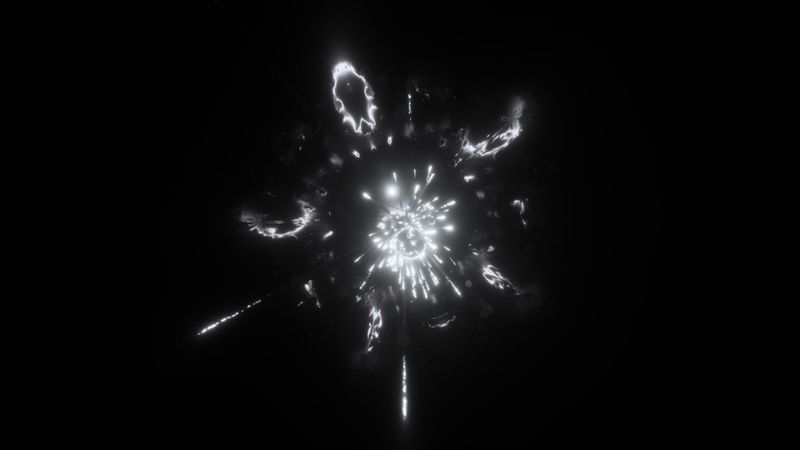
Taiwanese XR artist, visual artist and animator Wen-Yee Hsieh invites viewers into a disturbing plunge on the border of dream and dystopia. Limbophobia is a dark, hypnotic journey through a landscape that resembles the collective mind of humanity — a space full of unrest, transformation, and oppressive images that emerge as echoes of our fears and desires. The surreal visual language alternates fragile beauty with a sense of threat, drawing us into a world where the boundary between inner landscape and outer reality continually dissolves. This unique one-man project quietly, with cold intensity, suggests where humanity can arrive in its obsession with the insurmountable.
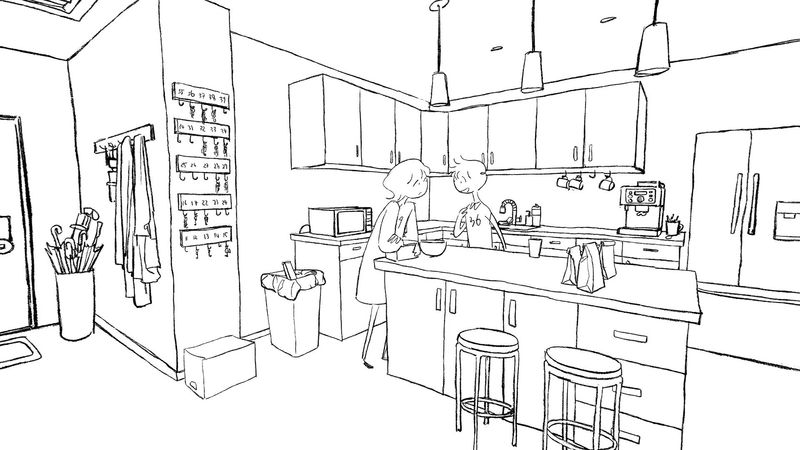
39 versions of Polly live in her house. They wear a number on their T-shirts representing their age. Each version of Polly lives and ages without replacing the previous one. Her life revolves in an endless cycle. Who is the real Polly? Her character transforms over time and manifests through her individual selves. Some parts of the apartment are calm, others rage with chaos, in others a subtle but fatal pain slumbers. And yet this is a day like any other...
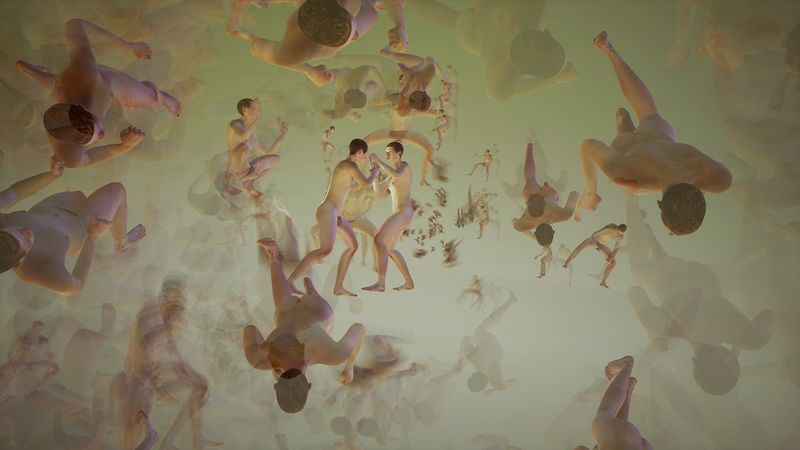
Is it possible to achieve uniqueness among eight billion others? 8 Billion Selves is a fluid, dreamlike journey through a world where people are born, work, wage wars, love, dance, create art and die. Sounds and images layer into a kaleidoscope that reveals the beauty of shared existence and its disturbing shadows, reflecting our collective presence and fragile individuality. This wordless work explores our place in the crowd and the growing pressure toward uniformity, manifested in an obsession with 'fake' aesthetics — bodily modifications and artificial interventions in identity that gradually grow to absurd, grotesque proportions.
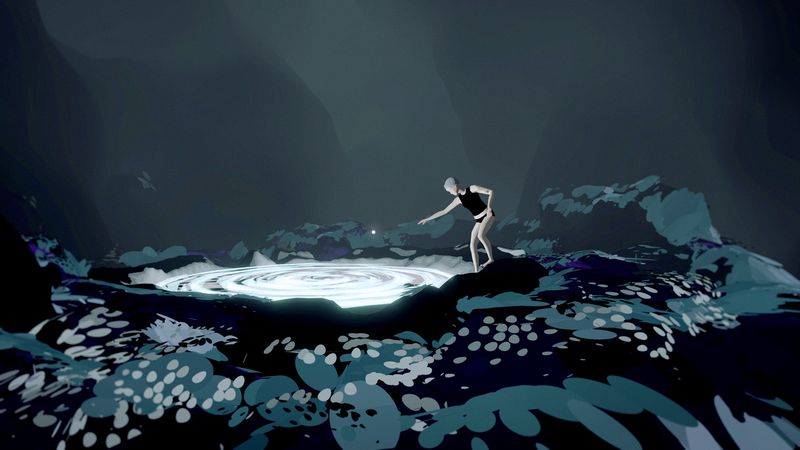
Three characters flee through a harsh Icelandic landscape. What are they fleeing from and why? The journey gradually transforms into a surreal wandering across time and space. The main heroine enters a mysterious pool and reality dissolves into colors, rhythm and the movement of the surrounding world, until only the heroine's inner struggle with herself remains. The work connects virtual reality with physical theatre and new circus, inviting viewers into an imaginary, Lynchian mysterious space where the boundary between dream and reality disappears and where our own identity is born and perishes.
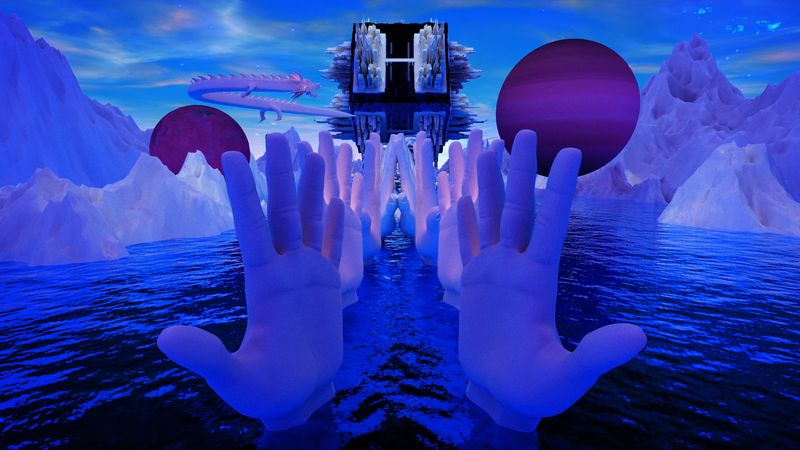
The prefix 'oneiro' refers to dreams — and as the title of this 360° film suggests, Oneiro offers a vivid, surrealistic, dreamlike vision of the digital world inside the 'mind' of artificial intelligence. Today we are accustomed to asking AI software a wide range of questions: from simple fact-checking and data analysis to personal therapeutic counselling or relationship advice. But what if instead of the polished, servile tone of current models, artificial intelligence actually told us what it thinks? This satirical comedy gives AI human feelings and moods, drawing parallels between our dreams and algorithms.
A maximum of 7 people can be in the space at one time, where they will be able to watch selected VR films during a one-hour session.
What could be more fake than virtual reality? It’s hard to find a better competitor. Especially when VR joins forces with AI – it becomes a full-blown double whammy of artificiality. Over its first decade, virtual reality has accumulated plenty of labels, along with a fair share of fake news. Claims like “VR will replace cinema,” “soon we’ll only have sex in virtual reality,” and “before long, we’ll only meet people in VR.” So far, all of these predictions have proven hollow. People still enjoy having solid ground beneath their feet, the feel of touch on their skin, and their senses fully awakened.
This year’s inaugural VR selection is therefore not an escapist journey into distant dreamscapes as a preview of some determined future. Instead, it highlights how the reality we experience can shift – and how “realness” and “authenticity” can take many different forms. Whether we are talking about myths, work routines, social media, dreams, artificial intelligence, or even plastic interspecies surgery.
On the fictional social network Owlet, only positive comments are allowed. On the surface it's a cheerful world of cute and bizarre posts, but the idyll is shattered when popular influencer Kristine suddenly disappears and the platform begins to suppress any questions about her fate. Together with other users, you try to circumvent increasingly strict censorship algorithms and find ways to communicate despite system surveillance. The project draws on real strategies used by activists who creatively overcome online censorship through symbols, codes, and multilingual memes.
This world does not shine with diversity. Everything is made of grey cubes and the local inhabitants blindly follow orders, mechanically pushing blocks forward and submitting to a system that seems meaningful at first glance, but in reality exhausts them and strips them of individuality. An abstract yet gently narrative wordless film explores the geometry of reality through a minimalist visual language, becoming a quiet commentary on the illusion of the value of work in rigid structures. What happens when one of the inhabitants decides to step out of this monotonous regime?
Taiwanese XR artist, visual artist and animator Wen-Yee Hsieh invites viewers into a disturbing plunge on the border of dream and dystopia. Limbophobia is a dark, hypnotic journey through a landscape that resembles the collective mind of humanity — a space full of unrest, transformation, and oppressive images that emerge as echoes of our fears and desires. The surreal visual language alternates fragile beauty with a sense of threat, drawing us into a world where the boundary between inner landscape and outer reality continually dissolves. This unique one-man project quietly, with cold intensity, suggests where humanity can arrive in its obsession with the insurmountable.
39 versions of Polly live in her house. They wear a number on their T-shirts representing their age. Each version of Polly lives and ages without replacing the previous one. Her life revolves in an endless cycle. Who is the real Polly? Her character transforms over time and manifests through her individual selves. Some parts of the apartment are calm, others rage with chaos, in others a subtle but fatal pain slumbers. And yet this is a day like any other...
Is it possible to achieve uniqueness among eight billion others? 8 Billion Selves is a fluid, dreamlike journey through a world where people are born, work, wage wars, love, dance, create art and die. Sounds and images layer into a kaleidoscope that reveals the beauty of shared existence and its disturbing shadows, reflecting our collective presence and fragile individuality. This wordless work explores our place in the crowd and the growing pressure toward uniformity, manifested in an obsession with 'fake' aesthetics — bodily modifications and artificial interventions in identity that gradually grow to absurd, grotesque proportions.
Three characters flee through a harsh Icelandic landscape. What are they fleeing from and why? The journey gradually transforms into a surreal wandering across time and space. The main heroine enters a mysterious pool and reality dissolves into colors, rhythm and the movement of the surrounding world, until only the heroine's inner struggle with herself remains. The work connects virtual reality with physical theatre and new circus, inviting viewers into an imaginary, Lynchian mysterious space where the boundary between dream and reality disappears and where our own identity is born and perishes.
The prefix 'oneiro' refers to dreams — and as the title of this 360° film suggests, Oneiro offers a vivid, surrealistic, dreamlike vision of the digital world inside the 'mind' of artificial intelligence. Today we are accustomed to asking AI software a wide range of questions: from simple fact-checking and data analysis to personal therapeutic counselling or relationship advice. But what if instead of the polished, servile tone of current models, artificial intelligence actually told us what it thinks? This satirical comedy gives AI human feelings and moods, drawing parallels between our dreams and algorithms.
A maximum of 7 people can be in the space at one time, where they will be able to watch selected VR films during a one-hour session.
What could be more fake than virtual reality? It’s hard to find a better competitor. Especially when VR joins forces with AI – it becomes a full-blown double whammy of artificiality. Over its first decade, virtual reality has accumulated plenty of labels, along with a fair share of fake news. Claims like “VR will replace cinema,” “soon we’ll only have sex in virtual reality,” and “before long, we’ll only meet people in VR.” So far, all of these predictions have proven hollow. People still enjoy having solid ground beneath their feet, the feel of touch on their skin, and their senses fully awakened.
This year’s inaugural VR selection is therefore not an escapist journey into distant dreamscapes as a preview of some determined future. Instead, it highlights how the reality we experience can shift – and how “realness” and “authenticity” can take many different forms. Whether we are talking about myths, work routines, social media, dreams, artificial intelligence, or even plastic interspecies surgery.
On the fictional social network Owlet, only positive comments are allowed. On the surface it's a cheerful world of cute and bizarre posts, but the idyll is shattered when popular influencer Kristine suddenly disappears and the platform begins to suppress any questions about her fate. Together with other users, you try to circumvent increasingly strict censorship algorithms and find ways to communicate despite system surveillance. The project draws on real strategies used by activists who creatively overcome online censorship through symbols, codes, and multilingual memes.
This world does not shine with diversity. Everything is made of grey cubes and the local inhabitants blindly follow orders, mechanically pushing blocks forward and submitting to a system that seems meaningful at first glance, but in reality exhausts them and strips them of individuality. An abstract yet gently narrative wordless film explores the geometry of reality through a minimalist visual language, becoming a quiet commentary on the illusion of the value of work in rigid structures. What happens when one of the inhabitants decides to step out of this monotonous regime?
Taiwanese XR artist, visual artist and animator Wen-Yee Hsieh invites viewers into a disturbing plunge on the border of dream and dystopia. Limbophobia is a dark, hypnotic journey through a landscape that resembles the collective mind of humanity — a space full of unrest, transformation, and oppressive images that emerge as echoes of our fears and desires. The surreal visual language alternates fragile beauty with a sense of threat, drawing us into a world where the boundary between inner landscape and outer reality continually dissolves. This unique one-man project quietly, with cold intensity, suggests where humanity can arrive in its obsession with the insurmountable.
39 versions of Polly live in her house. They wear a number on their T-shirts representing their age. Each version of Polly lives and ages without replacing the previous one. Her life revolves in an endless cycle. Who is the real Polly? Her character transforms over time and manifests through her individual selves. Some parts of the apartment are calm, others rage with chaos, in others a subtle but fatal pain slumbers. And yet this is a day like any other...
Is it possible to achieve uniqueness among eight billion others? 8 Billion Selves is a fluid, dreamlike journey through a world where people are born, work, wage wars, love, dance, create art and die. Sounds and images layer into a kaleidoscope that reveals the beauty of shared existence and its disturbing shadows, reflecting our collective presence and fragile individuality. This wordless work explores our place in the crowd and the growing pressure toward uniformity, manifested in an obsession with 'fake' aesthetics — bodily modifications and artificial interventions in identity that gradually grow to absurd, grotesque proportions.
Three characters flee through a harsh Icelandic landscape. What are they fleeing from and why? The journey gradually transforms into a surreal wandering across time and space. The main heroine enters a mysterious pool and reality dissolves into colors, rhythm and the movement of the surrounding world, until only the heroine's inner struggle with herself remains. The work connects virtual reality with physical theatre and new circus, inviting viewers into an imaginary, Lynchian mysterious space where the boundary between dream and reality disappears and where our own identity is born and perishes.
The prefix 'oneiro' refers to dreams — and as the title of this 360° film suggests, Oneiro offers a vivid, surrealistic, dreamlike vision of the digital world inside the 'mind' of artificial intelligence. Today we are accustomed to asking AI software a wide range of questions: from simple fact-checking and data analysis to personal therapeutic counselling or relationship advice. But what if instead of the polished, servile tone of current models, artificial intelligence actually told us what it thinks? This satirical comedy gives AI human feelings and moods, drawing parallels between our dreams and algorithms.